Porsche 911 Dakar. Test, specs, performance and price. The most versatile 911 in history
The Porsche 911 Dakar proves that the iconic sports coupe can deliver thrills not just on the track and highway, but on gravel, sand, and mountain trails too. This limited edition, inspired by the legendary Paris-Dakar Rally, combines the performance Porsche 911 is known for with off-road capability no series-production version of this model has offered before. Here's a look at its history, technical specifications, performance, equipment, and current prices.
W tym artykule:
- The idea of an off-road Porsche becomes reality
- History of the Porsche 911 Dakar. A tribute to the Paris-Dakar Rally winner
- Body and suspension. This is the most off-road-capable 911 yet
- Interior of the Porsche 911 Dakar
- Engine, drivetrain and performance of the Porsche 911 Dakar
- Rallye and Offroad modes make a huge difference
- What's it like to drive the most unusual 911 ever built?
- Porsche 911 Dakar. Price
- Is the Porsche 911 Dakar the most versatile 911 in history?
The idea of an off-road Porsche becomes reality
When Porsche unveiled the production version of the 911 Dakar, many fans of the brand could hardly believe their eyes. A manufacturer famous for perfecting sports cars had built a model with raised suspension, off-road tires, and underbody protection that leaves the tarmac without hesitation.
While unofficial Safari-style projects based on classic 911 generations have existed for years, it was only this factory version that turned the idea of an off-road Porsche into reality. Crucially, this isn't merely a flashy show car — it's a fully-fledged variant engineered for dynamic driving on gravel roads and desert routes.
History of the Porsche 911 Dakar. A tribute to the Paris-Dakar Rally winner
The model's name is no coincidence. Porsche is paying tribute to its 1984 Paris-Dakar Rally victory, when the winning car was the 953, a specially prepared rally version of the 911 fitted with all-wheel drive.
That triumph proved the 911's signature rear-mounted engine layout could hold its own even in the most extreme desert and rocky-terrain conditions.
The modern 911 Dakar draws on Porsche's experience from both motorsport and its current road-going models. The car is based on the Porsche 911 Carrera 4 GTS, but borrows numerous solutions from the Turbo variants, ensuring durability even off paved roads.
Adding to its appeal is a limited production run of just 2,500 units worldwide, already making it one of the most sought-after modern Porsches.
 Fot. Jacek Jurecki
Body and suspension. This is the most off-road-capable 911 yet
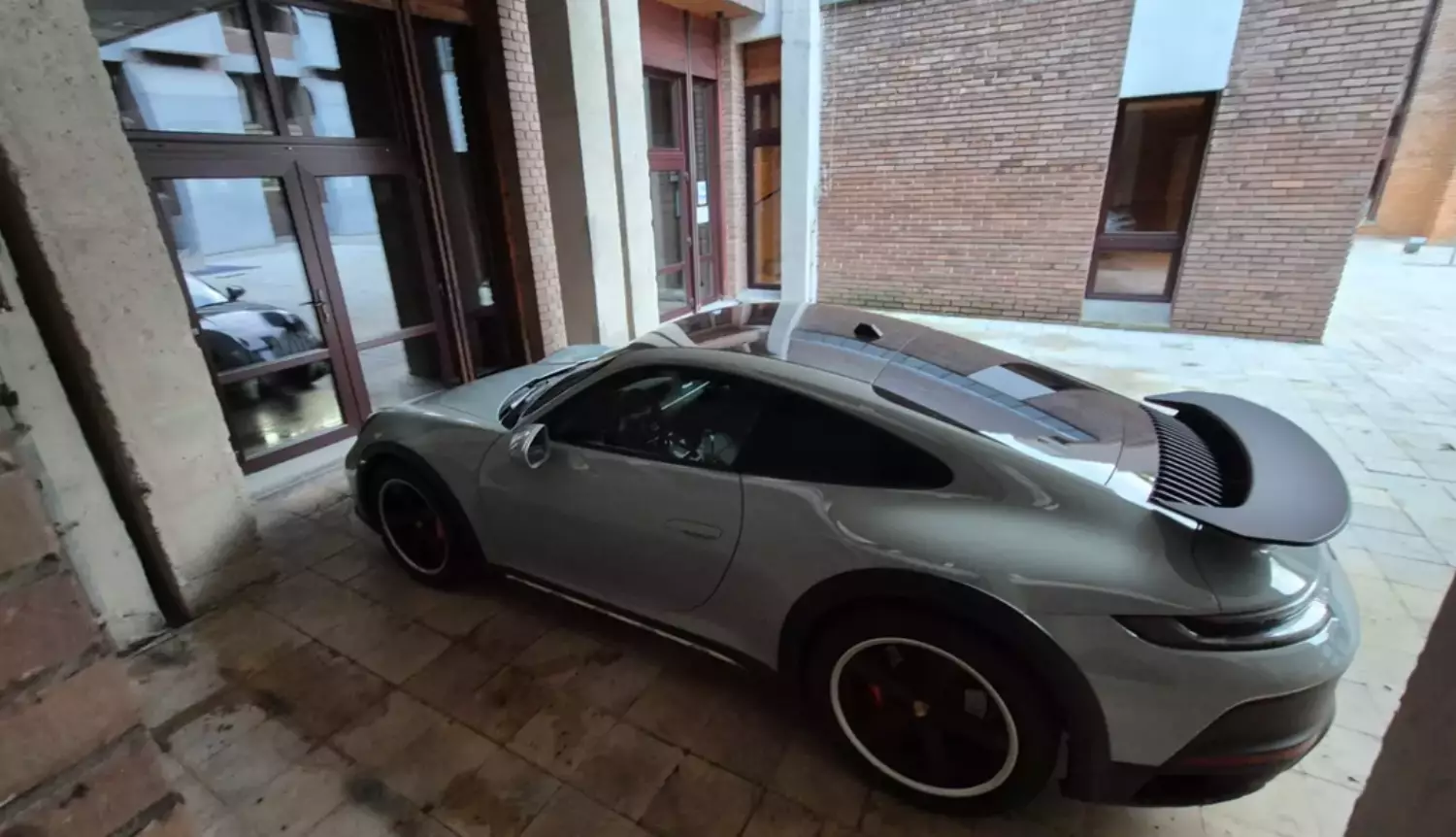
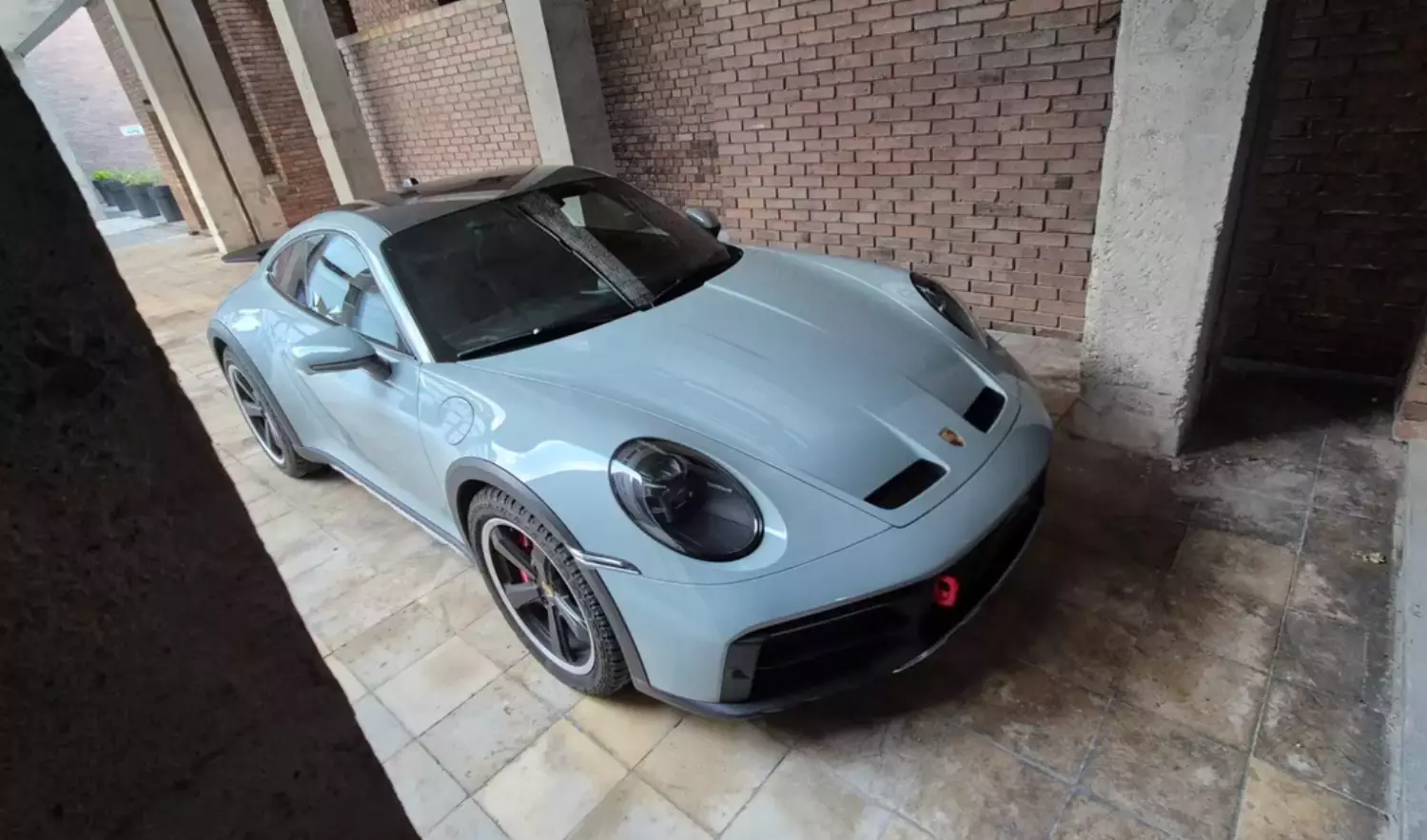
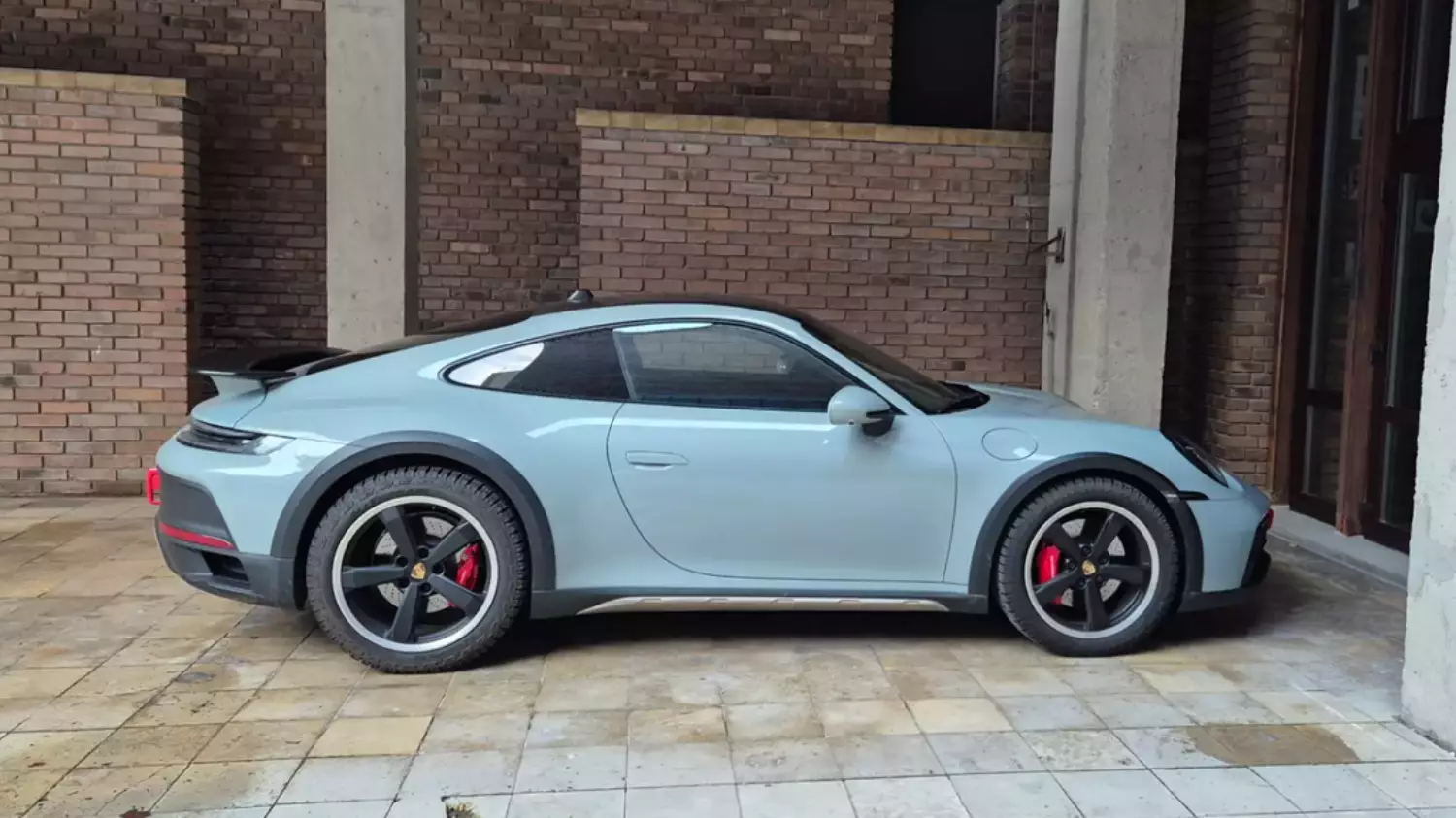
The biggest change compared to other 911 variants is the increased ground clearance.
The car sits 50 mm higher than the Carrera as standard, while the hydraulic lift system can raise it a further 30 mm, for a total gain of 80 mm. Remarkably, the car can be driven at speeds of up to roughly 170 km/h with the suspension raised — something unheard of in most sports cars.
The underbody is protected by steel skid plates shielding the engine, suspension, and drivetrain from rock strikes and rough terrain.
The model also comes fitted with Pirelli Scorpion All Terrain Plus tires developed specifically for this version. Porsche kept its classic staggered setup — narrower tires up front, wider ones at the rear — so the car still handles like a proper 911.
Rear-axle steering, active engine mounts, and adaptive PASM suspension all come as standard.
Interior of the Porsche 911 Dakar
The cabin stays true to the character of contemporary 911 models.
The driver gets a digital instrument cluster, the Porsche Communication Management infotainment system, and high-quality trim materials.
Lightweight carbon-fiber-reinforced plastic (CFRP) bucket seats come as standard, helping to cut the car's overall weight.
The rear seats have been removed entirely, freeing up space for the suspension-lift hardware and further reducing curb weight.
Engine, drivetrain and performance of the Porsche 911 Dakar
Mounted behind the rear axle is the same 3.0-liter twin-turbo flat-six boxer engine found in the Carrera 4 GTS.
Key technical specifications:
- Engine: 3.0L twin-turbo flat-six
- Power: 480 hp
- Torque: 570 Nm
- Drivetrain: Porsche Traction Management (AWD)
- Transmission: 8-speed PDK
- Curb weight: approx. 1,605 kg
- 0–100 km/h: 3.4 seconds
- Top speed: 240 km/h
The limited top speed is mainly a result of the off-road All Terrain tires, which trade outright speed for far better grip away from tarmac.
 Fot. Jacek Jurecki
Rallye and Offroad modes make a huge difference
It's the electronics that let the 911 Dakar completely change character depending on the surface.
Rallye mode sends more torque to the rear axle, enabling long, controlled slides on gravel or sand. Drivers can also use Rallye Launch Control for even more aggressive starts on loose surfaces.
Offroad mode adjusts the drivetrain, suspension, and stability control settings, improving traction on sand, rocks, or steep inclines.
The electronically controlled rear differential distributes torque effectively between the wheels, delivering traction in situations where ordinary sports cars simply wouldn't stand a chance.
What's it like to drive the most unusual 911 ever built?
On tarmac, the car handles surprisingly similarly to the Carrera 4 GTS. The steering remains remarkably precise, and rear-axle steering keeps it agile despite the increased ground clearance.
The only clear giveaway that this isn't a standard 911 is the slightly louder hum of the off-road tires and a marginally higher center of gravity noticeable when carrying serious speed through corners.
The car's true potential, however, is revealed off the beaten path. On gravel, it slides through corner after corner with ease, maintaining the predictability Porsche is known for.
The dual-clutch PDK gearbox shifts instantly, engine response remains immediate, and the all-wheel-drive system makes full use of whatever grip is available.
Worth noting too is the modified cooling system and more efficient air filtration, allowing for sustained driving in high heat and heavy dust without any drop in performance.
Its greatest strength, though, remains its versatility. After a run through gravel or sand, the car returns just as confidently to the tarmac, offering the comfort, precision, and performance Porsche 911 has been famous for over decades.
Porsche 911 Dakar. Price
Production ended after 2,500 units were built, so buying a new one is no longer possible. On the used market, the Porsche 911 Dakar remains one of the brand's most sought-after modern models.
At launch, prices in Poland started at around PLN 1.15 million, though most buyers opted for extensive equipment packages that significantly raised the final price.
Today, used examples on the market typically fetch upwards of PLN 1.5 million. Cars with minimal mileage, unique configurations, or the Rallye Design package command even higher prices, and their collector value continues to climb.
Is the Porsche 911 Dakar the most versatile 911 in history?
The Porsche 911 Dakar proves that a sports car doesn't have to be confined to tarmac. It retains the performance, precision, and character of the classic 911, while offering the freedom to tackle gravel roads, desert routes, and rocky trails with ease.
It's not just one of the most original variants of this iconic model — it's proof that even after more than 60 years of history, Porsche can still surprise. For many enthusiasts, the 911 Dakar is the most versatile 911 ever to reach series production.